What Is a Bi-LED Projector Lens? A Beginner’s Guide
11 May 2026
by Conpex
Reading volume: 610
A Bi-LED projector lens is an automotive lighting upgrade that uses LED light sources and a projector optical system to control both low beam and high beam.
It is designed to produce a focused beam pattern, clearer cut-off line, and stronger road visibility than many basic lighting upgrades.
The word “Bi” means the projector can support two beam functions, usually low beam and high beam. This makes Bi-LED projector lenses popular in professional headlight retrofit markets.
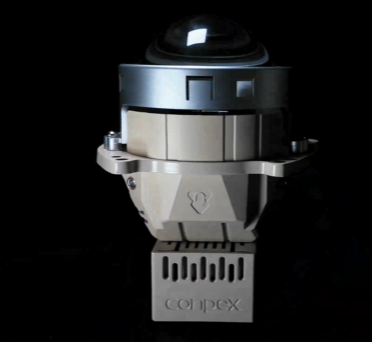
How Does a Bi-LED Projector Lens Work?
A Bi-LED projector lens is not just an LED chip inside a housing. It is a complete optical structure.
The LED chips produce light. The reflector collects and directs the light. The projector lens shapes and projects the beam onto the road.
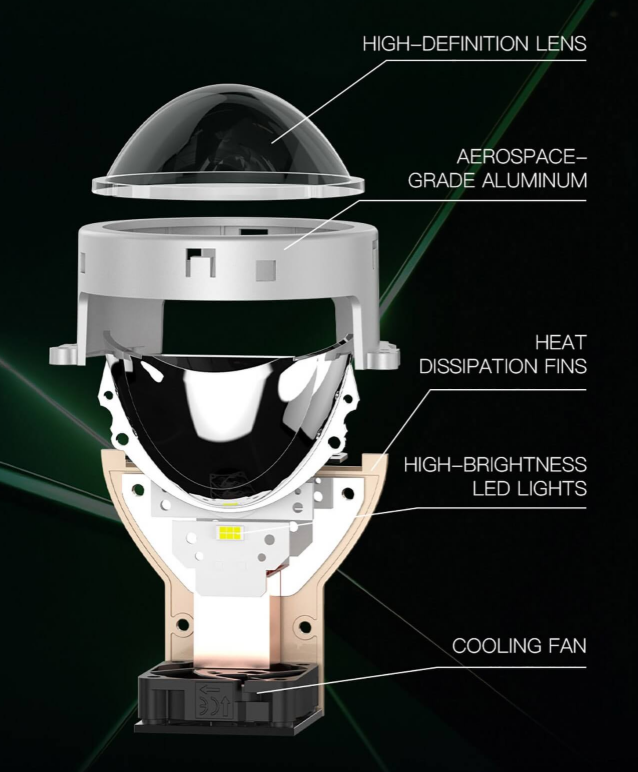
In many designs, an internal cut-off structure helps control low beam output and reduce glare.
This is different from a simple LED bulb replacement. A bulb mainly provides the light source. A projector lens controls how that light is distributed.
Why Beam Pattern Matters
A good beam pattern puts useful light where the driver needs it. It improves the view of the lane, road edges, signs, and obstacles.
If the beam pattern is poor, even a high-power light can perform badly. The light may scatter, create dark zones, or shine too high.
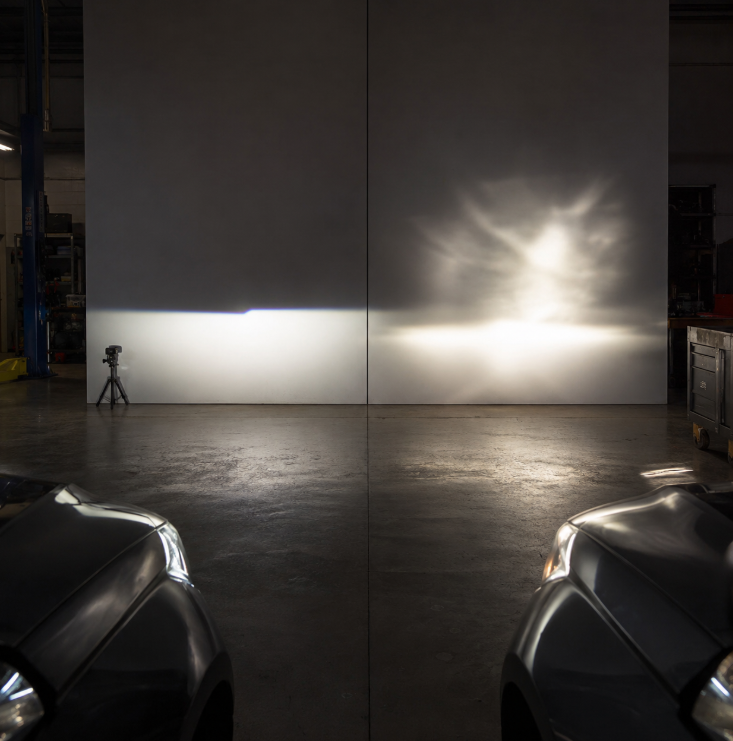
This can reduce driving comfort and create glare for other drivers.
For this reason, professional buyers should check beam pattern photos, wall test images, and road test results when choosing a projector lens.
What Is a Cut-Off Line?
The cut-off line is the upper boundary of the low beam. A clear cut-off line helps keep light on the road and away from the eyes of oncoming drivers.
For retrofit shops, this is one of the easiest performance points to demonstrate. A sharp cut-off line on a test wall makes the upgrade look professional and controlled.
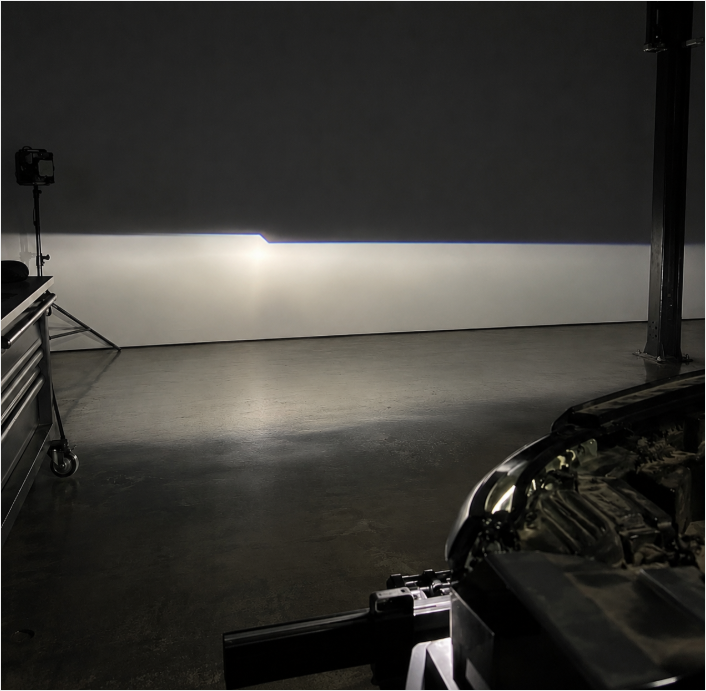
For distributors, it also helps explain why projector lenses are different from ordinary headlight bulbs. The value is not only brightness; it is optical control.
Low Beam and High Beam Performance
Low beam is used for normal night driving. It should provide stable foreground visibility without causing strong glare.
High beam is used when the driver needs longer-distance visibility, such as on dark rural roads or open highways. A good Bi-LED projector lens should balance both functions.
When comparing products, buyers should not only ask for wattage or lumen. They should also check Low Beam Lux, High Beam Lux, testing distance, beam pattern, and heat dissipation design.
Bi-LED Projector Lens vs LED Headlight Bulbs
LED headlight bulbs are usually easier to install and more suitable for basic replacement demand. They are useful for high-volume aftermarket sales.
Bi-LED projector lenses are more suitable for professional retrofit upgrades. They offer stronger optical control and can create a premium lighting result.
For a retrofit shop, a projector lens can become a high-value service item. For a distributor, it can help build a product line that is not based only on price.
What Specifications Should Buyers Check?
Before choosing a Bi-LED projector lens, buyers should check:
Low Beam Lux
High Beam Lux
Wattage
Color temperature
Beam pattern
Cut-off line
Lens material
Cooling structure
Driver design
Waterproof or dustproof rating
Installation compatibility
These details help buyers understand real performance, not just marketing claims.
Who Should Use Bi-LED Projector Lenses?
Bi-LED projector lenses are especially suitable for retrofit shops that serve customers looking for premium lighting upgrades.
They are also suitable for automotive lighting distributors that want more differentiated products.
Compared with common LED bulbs, projector lenses usually require more explanation, but they also support higher-value sales.
For car owners, a Bi-LED projector lens can be a strong upgrade, but installation should usually be done by a professional technician.
Common Mistakes When Choosing a Projector Lens
One common mistake is only looking at lumen. Another is choosing a product without checking beam pattern. Some buyers also ignore heat dissipation, lens material, or installation space.
A better method is to evaluate the full optical system. A reliable projector lens should combine brightness, beam control, cooling stability, and practical installation support.
Final Advice
A good Bi-LED projector lens is not simply a brighter headlight. It is a controlled lighting system.
It should help drivers see better, help retrofit shops deliver a professional result, and help distributors sell products with clearer value.
If you are building a premium automotive lighting product line, Bi-LED projector lenses are a category worth developing.
Start by comparing real beam performance, clear specifications, and supplier support.


