How to Choose a Bi-LED Fog Projector for Professional Retrofit Shops
09 May 2026
by Conpex
Reading volume: 482
Professional retrofit shops should choose Bi-LED fog projectors based on beam pattern, Lux performance, cut-off line, lens structure, color temperature,
IP rating, cooling design, and market positioning. A good fog projector should not only look bright. It should help drivers see better in fog, rain, snow, and night driving conditions.
For retrofit shops, the right product can also increase upgrade value.
It gives the shop a stronger story to tell customers: better visibility, better beam control, and a more professional lighting result.
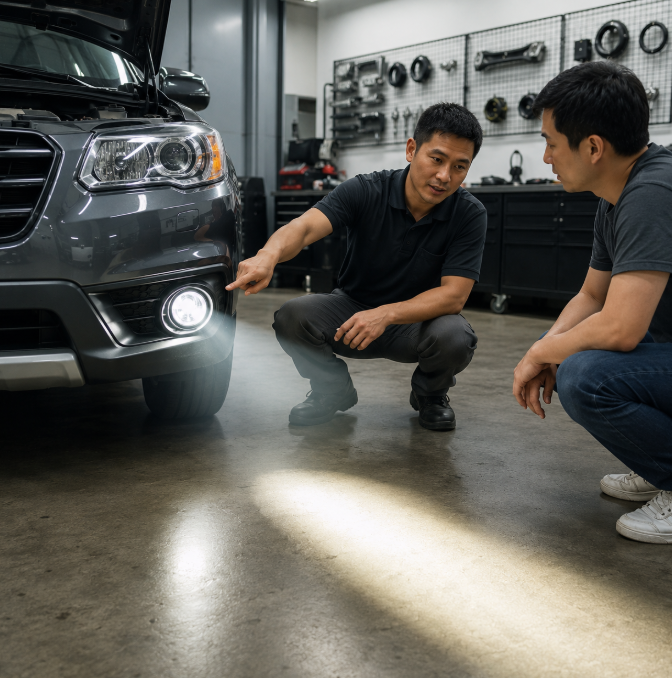
Start with the Customer’s Driving Need
The first question is not “which product is the brightest?” The first question is “what driving problem does the customer want to solve?”
Some customers want better visibility in fog and rain. Some want stronger high beam output for dark roads.
Some want a premium look for modified vehicles. Others want an all-weather lighting upgrade.
A retrofit shop should match the fog projector to the customer’s real use case. This makes the recommendation more professional and easier to trust.
Check Low Beam Lux
Low beam performance is very important for fog projectors. Fog lights are usually used for near-road visibility, so the low beam should be stable, controlled, and useful.
Lux is a better reference than lumen for this purpose. Lumen shows total light output, but Lux shows how strong the light is at a measured point.
For example, the GT10 Bi-LED Fog Projector offers 3500LX low beam at 5 meters. This makes it easier for shops to explain real beam performance to customers.
Check High Beam Performance
High beam is useful when customers need longer-distance visibility. This is especially important for dark roads, mountain roads, or rural driving.
GT10 uses 4000LX high beam at 5 meters. GT10 Plus and GT10 Pro increase high beam performance to 6000LX at 5 meters. This gives retrofit shops different upgrade levels to offer.
A shop can position the standard model as a balanced upgrade, the Plus version as a stronger high beam option, and the Pro version as a premium optical choice.
Compare Lens Structure
Lens structure affects both performance and product positioning.
An original lens without laser is suitable for standard upgrade needs. A single-laser lens can provide a stronger upgrade story and more advanced visual appeal.
A double-laser lens can support a more premium product package.
For retrofit shops, this difference matters because customers often compare visible structure, beam effect, and perceived value. A clear product ladder makes selling easier.
Evaluate Beam Pattern and Cut-Off Line
A good fog projector should create a controlled beam pattern. It should light the road effectively without creating unnecessary glare.
The cut-off line is especially important. A flat cut-off line helps keep low beam output more controlled. This is useful for safer and more comfortable driving.
Before choosing a product, shops should review wall test photos, road test images, and installation examples.
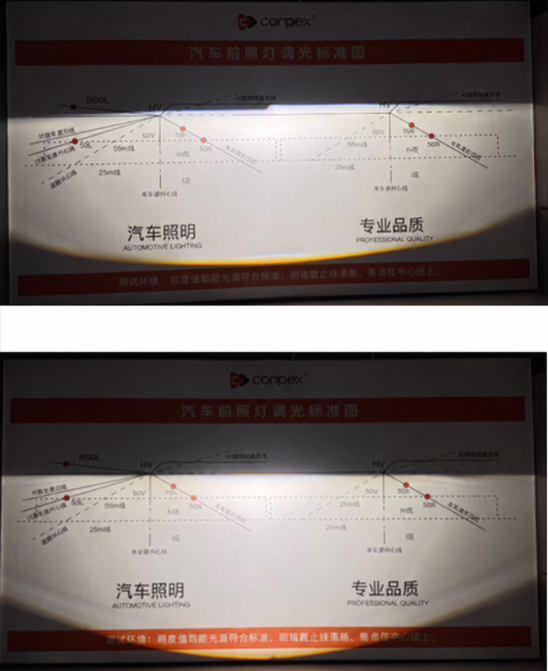
These materials can also be used later for customer education and social media content.
Check Durability and Protection
Fog projectors work in harsh conditions. They may face water, dust, mud, heat, vibration, and road debris.
This is why IP rating matters. GT10 series models use IP67 protection, which helps support use in rain and dusty road conditions.
Lens material also matters. A high borosilicate glass lens can support optical stability and heat resistance. Housing design and heat dissipation also affect long-term performance.
Think About Market Fit
A professional retrofit shop should not only choose products based on technical data. It should also think about what sells well in the local market.
If the local market prefers practical upgrades, a standard Bi-LED fog projector may be enough.
If customers want stronger visual identity and premium modification, single-laser and double-laser options can help increase order value.
For areas with fog, rain, or snow, a 3-color version with 3000K, 4300K, and 6000K can be a strong all-weather upgrade option.
Final Advice
Choosing a Bi-LED fog projector is not only a technical decision. It is also a business decision.
Retrofit shops should choose products that are easy to install, easy to explain, and easy to sell.
Look for clear Lux data, controlled beam pattern, stable cut-off line, reliable lens material, IP protection, and a product lineup that supports different customer budgets.
A well-planned fog projector lineup can help a retrofit shop move from basic lighting replacement to higher-value lighting upgrade packages.


