Why Some LED Headlights Fade Instead of Burning Out
27 April 2026
by Conpex
Reading volume: 544
Halogen bulbs usually fail dramatically. One moment they’re working, the next the filament snaps—and you’re driving with instant darkness.
LEDs behave differently.
Instead of a sudden blackout, they often grow gradually dimmer over months or years.
This slow LED headlight dimming can be more dangerous than total failure because drivers adapt to the reduced brightness without realizing how much visibility they’ve lost.
By the time the issue becomes obvious, nighttime safety may already be compromised.
Understanding why LEDs fade instead of burn out requires a look at semiconductor physics and heat management.
The Science of Semiconductor Aging
LEDs are not traditional lightbulbs. They are semiconductors—solid-state devices that produce light when electrons move across a microscopic junction.
Because there is no fragile filament, LEDs rarely “burn out” suddenly. Instead, they age.
This aging process is known as Lumen Depreciation—the gradual reduction of light output over time. At the atomic level, several mechanisms contribute:
Crystal lattice defects form in the semiconductor material
Microscopic imperfections increase electrical resistance
Efficiency decreases as internal recombination losses rise
As these changes accumulate, less electrical energy is converted into visible light. The LED still turns on—but it produces fewer lumens.
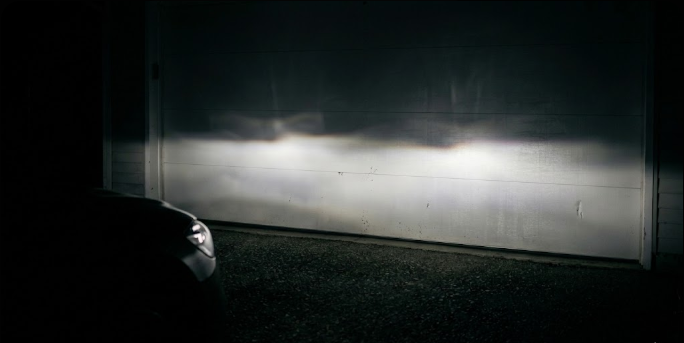
Unlike halogens, which fail abruptly, LED output declines so gradually that drivers often fail to notice. Human eyes adapt quickly to brightness changes, masking the problem until visibility drops significantly.
This is why LED dimming is a silent safety risk.
The Role of Phosphor Degradation
White LEDs are not actually white.
Most automotive LEDs start as blue light. That blue light passes through a yellow phosphor coating, which converts part of the spectrum into longer wavelengths. The combined result appears white.
Over time, heat and electrical stress cause phosphor degradation:
The phosphor layer develops micro-cracks
Chemical stability declines
Conversion efficiency drops
When this happens, two things occur:
Light output decreases dramatically
Color temperature shifts—often becoming more bluish or even slightly purple
This color shift is a warning sign. It indicates that the phosphor layer is breaking down and luminous efficiency is declining.
In practical terms, fading phosphor means reduced road illumination—even if the LED still looks bright when viewed directly.
Heat: The Catalyst for Fading
Heat is the primary accelerator of LED aging.
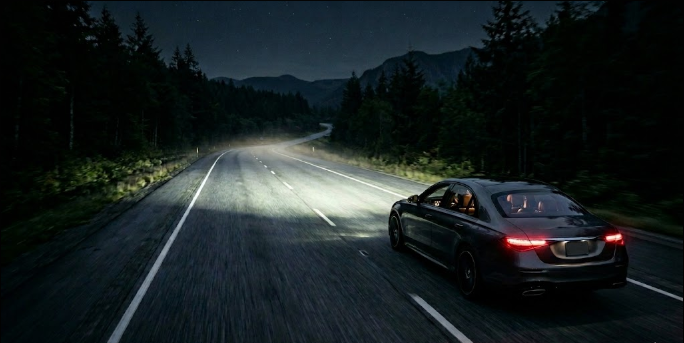
The most critical parameter inside an LED is Junction Temperature—the temperature at the microscopic point where light is generated. When this temperature rises beyond optimal levels:
Semiconductor aging speeds up
Phosphor degradation accelerates
Electrical resistance increases
Poor thermal management doesn’t just cause catastrophic failure—it causes premature fading.
Common culprits include:
Undersized heat sinks
Low-quality cooling fans
Inadequate airflow inside sealed headlight housings
High junction temperature over months or years can reduce brightness long before the LED completely fails. In many cases, thermal stress turns a “50,000-hour” LED into one that noticeably dims within a fraction of that time.
Heat rarely kills instantly—but it always leaves a mark.
The L70 Standard: When Is an LED “Dead”?
In the lighting industry, LEDs are evaluated using the L70 standard.
An LED is considered to have reached the end of its useful life when it produces only 70% of its original light output.
That means:
The LED still works
The beam still turns on
But brightness has dropped by 30%
From a safety perspective, that 30% loss is significant. On dark highways or in poor weather, reduced illumination shortens reaction time and increases risk.
If your headlights appear noticeably dimmer than when new, they may already be past their effective service life—even if they haven’t failed completely.
Conclusion: Safety First
LED headlights rarely die dramatically. They fade.
Because LED headlight dimming happens gradually, many drivers underestimate its impact on night driving safety. Waiting for total darkness is not a responsible strategy.
Instead:
Periodically compare your beam output against a wall
Watch for color shifting or uneven brightness
Replace bulbs in pairs to maintain balanced illumination
In automotive lighting, visibility is everything. If your LEDs are fading, they are effectively “dead” from a safety standpoint—even if they still turn on.
Don’t wait for sudden failure. Protect your vision—and your reaction time—before the road becomes darker than you realize.


