
Many drivers seek enhanced visibility for night-time journeys.Factory-installed halogen headlights often prove inadequate on unlit roads, in rainy conditions, or during highway driving.
LED headlights boast whiter, brighter illumination, prompting a common question among motorists:
Are LEDs the best headlights for night driving—and is upgrading a simple plug-and-play process?
The answer is yes, but with critical caveats. While LED upgrades are technically feasible, they are not always the optimal or safest solution for every vehicle.
The Short Answer
LEDs are widely assumed to be the top choice for car headlights in night driving scenarios, but real-world performance hinges on more than just brightness.
In many vehicles, swapping halogen bulbs for LEDs can lead to glare, uneven beam patterns, electrical malfunctions, or even legal complications.
Simply put:fitment does not equal proper performance.
Key Issues Many Drivers Overlook
1. Beam Pattern and Glare
Halogen headlight housings are engineered around a filament positioned at a precise focal point.
LED bulbs emit light through a different mechanism, which can disrupt the alignment of the beam pattern.
This may result in:
Excessive glare that impairs oncoming traffic
Overly bright foreground paired with poor long-distance visibility
Diminished comfort during night driving
For glare-free headlights that excel in night driving, beam control matters more than raw lumen output.重试
2. Heat Management
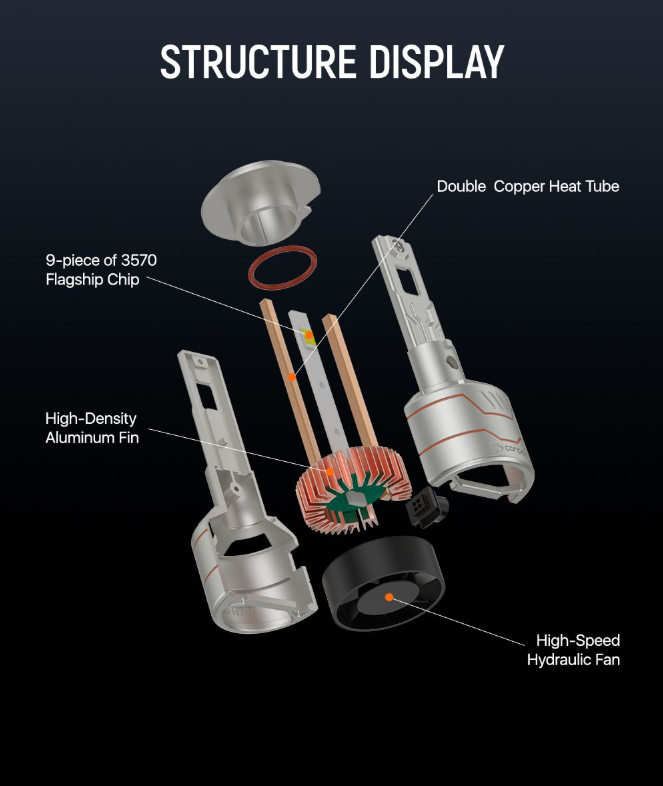
While LEDs are often labeled as “cool to the touch,” their chips and driver electronics generate significant heat at the base.
To dissipate this heat effectively, most LED bulbs rely on large heat sinks or cooling fans.
Limited space inside halogen housings can restrict airflow, which shortens the LED bulb’s lifespan—a major drawback of LED headlights conversions.
3. Electrical Compatibility
Modern vehicles are equipped with systems that monitor electrical load. Since LEDs consume less power than halogen bulbs, retrofitting them can trigger:
CAN bus warning errors
Flickering or pulsating lights
This makes selecting the ideal headlight bulbs for night driving a vehicle-specific decision.
4. Legal Considerations
In many regions, headlight systems are certified as a complete, integrated units.
Replacing halogen bulbs with LEDs may cause vehicles to fail inspections or violate road safety regulations—even if the upgraded lights appear brighter.
LED vs Halogen Headlights for Night Driving
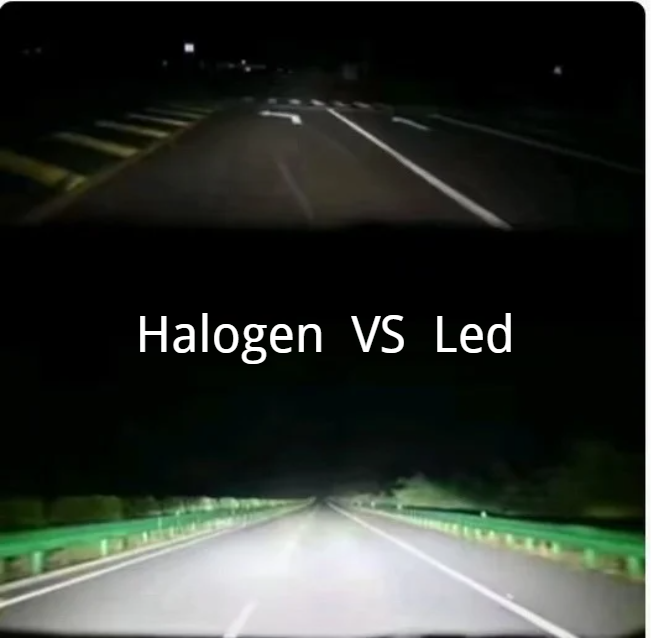
Halogen headlights typically offer:
More consistent and predictable beam patterns
Lower risk of glare
Fewer electrical or legal issues
This is why halogen systems can still deliver superior at night driving visibility, despite having lower brightness ratings on paper.
Buyer’s Checklist
Before upgrading your headlights, evaluate these factors:
Headlight housing type (projector vs. reflector)
Vehicle-specific electrical compatibility
Available space for LED cooling components
Local inspection and road legality requirements
Conclusion
So, which headlights are best for night driving?
The optimal solution is not always the brightest one. For many vehicles, a properly aligned, fully compliant halogen system can outperform a mismatched LED upgrade.
When selecting headlights, prioritize beam control, compatibility, and safety over bold brightness claims or low-cost conversion kits.


