A portable jump starter is one of those tools you hope you never need.It may sit untouched for months or even years—but the one time your car won’t start, it must work immediately.
That’s the irony of emergency equipment:used 1% of the time,required to work 100% of the time.
Whether your jump starter becomes a lifesaver or a useless plastic brick depends almost entirely on how it’s stored.
Lithium-ion batteries age even when idle, and improper storage is the fastest way to ruin them for good.
Below are practical, technician-approved long-term storage tips for jump starters that actually extend battery life and ensure reliability when you need it most.
The “Ideal Charge” Rule
One of the most common storage mistakes is keeping a jump starter either fully charged or completely drained. Lithium-ion cells do not tolerate these extremes—balance is key.
Why 100% Charge Is Harmful
Storing a lithium-ion battery at full charge for extended periods causes:
Increased internal chemical stress
Faster electrolyte breakdown
Accelerated permanent capacity loss
This won’t cause immediate failure, but it slowly erodes the battery’s usable power, leaving you with less cranking strength when an emergency hits.
Why 0% Charge Is Even Worse
Storing a jump starter at zero charge can let the battery voltage drop below its critical safety threshold. Once this happens, many units:
Will no longer accept a charge
Trigger a permanent protection lockout
Become effectively dead and unrepairable
The Storage “Sweet Spot”
For long-term storage, the safest charge range is:50%–80%.
This balance minimizes internal battery stress while retaining enough reserve power to prevent deep, damaging discharge.
If your jump starter has a battery indicator, aim for roughly two to three bars before putting it away.
This single habit dramatically boosts a jump starter’s shelf life.
Temperature & Storage Environment
Battery chemistry is extremely sensitive to temperature, and heat is the silent killer of lithium-ion cells.
Heat: the silent killer
High temperatures accelerate lithium-ion aging more than any other factor, leading to:
Rapid, irreversible capacity loss
Increased internal battery resistance
Reduced cold-cranking performance
A car's glove box can easily exceed 60°C (140°F) in summer. Prolonged exposure to these temperatures significantly shorten your jump starter’s lifespan.
Cold: Less Damaging, But Still Problematic
Cold does not cause permanent damage lithium batteries the way heat does, but it can lead to temporary performance issues:
Short-term power loss
Sluggish output during cold starts
A jump starter stored in freezing conditions may appear “dead” on first use, but it will usually recover once warmed to room temperature.
Best Storage Locations
For optimal battery health, store your jump starter in a space that is:
Cool and dry
Away from direct sunlight
Maintained at a stable, moderate temperature
Top choices include:
Under a vehicle seat (a far better option than the glove box)
A temperature-controlled garage
A home storage cabinet for long-term emergency kits
Maintaining a storage temperature between 10°C–25°C (50°F–77°F) will drastically slows battery aging.
The Maintenance Cycle: Don’t Forget Self-Discharge
Even when unused, lithium-ion batteries slowly lose energy—a natural process called battery self-discharge.
This is known as battery self-discharge.Most jump starters lose 2–5% of their charge per month (more if stored in warm environments).
Left unaddressed, this will eventually let the battery drop below its safe voltage level.
A Simple Check-and-Charge Schedule
To prevent this, follow a quick, consistent routine:
1. Check the battery charge every 3–6 months.
2. Recharge it back to the 60–80% sweet spot if the charge drops low.
3. Avoid topping it off to 100% unless you’re preparing for immediate use.
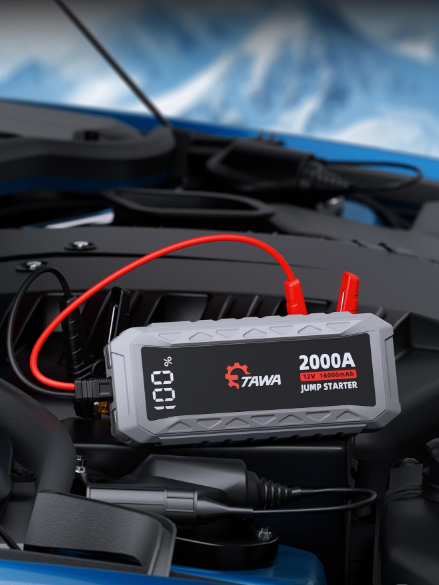
This small habit keeps the unit’s internal protection circuits active and prevents irreversible discharge damage.
Think of it as insurance:five minutes of maintenance twice a year avoids total failure when you need the jump starter most.
Physical Inspection & Safety Check
During your periodic charge check, take a moment to inspect the entire unit for signs of damage or degradation—this step is critical for both performance and safety:
Check the casing for swelling or bulging (a clear sign of internal battery failure).
Inspect clamps and cables for corrosion, fraying, or loose connections.
Ensure charging ports and jacks are clean, dry, and free of debris.
Any swelling of the casing means internal battery degradation—the unit should no longer be used, as this poses a serious safety risk.
Final Thoughts
A portable jump starter is only as reliable as the lithium-ion battery inside it.
By following these simple long-term storage tips:
Store at a 50–80% charge
Avoid heat exposure and direct sunlight
Recharge to the sweet spot every 3–6 months
Perform a physical inspection at each check
You’ll ensure that when your vehicle won’t start on a cold morning, late at night, or miles from help—your jump starter does exactly what it was designed to do.
Five minutes of maintenance twice a year delivers complete peace of mind on the road.


