Why OEM Headlights and Aftermarket LEDs Perform So Differently
13 March 2026
by Conpex
Reading volume: 601
If you’ve ever compared factory LED headlights on a new vehicle to a simple plug-in LED bulb upgrade, the difference is obvious.
OEM systems project a clean, razor-sharp cutoff that looks almost like a laser. Many aftermarket LEDs, by contrast, can resemble a bright flashlight stuffed into a housing.
So what creates this performance gap?
The answer lies in engineering philosophy. OEM systems are designed as a single, integrated unit.
Aftermarket bulbs are guests installed in a housing originally built for a different light source.
The Geometry of Light: Focal Points
At the heart of the OEM vs. aftermarket LED headlights debate is one concept: focal point precision.
A headlight housing is not just a container—it’s an optical instrument.
Reflectors and projector lenses are engineered around a specific light-emitting source.
In halogen systems, that source is a tiny filament positioned at an exact distance from the reflector bowl or projector shield.
Even a 1 mm deviation in light source placement can dramatically alter the light beam pattern.
When you install a generic LED bulb into a halogen housing:
The LED chip may sit slightly forward or backward
The emitting surface is flat instead of cylindrical
The size of the chip differs from the filament
This disrupts the housing’s optical geometry. The result?
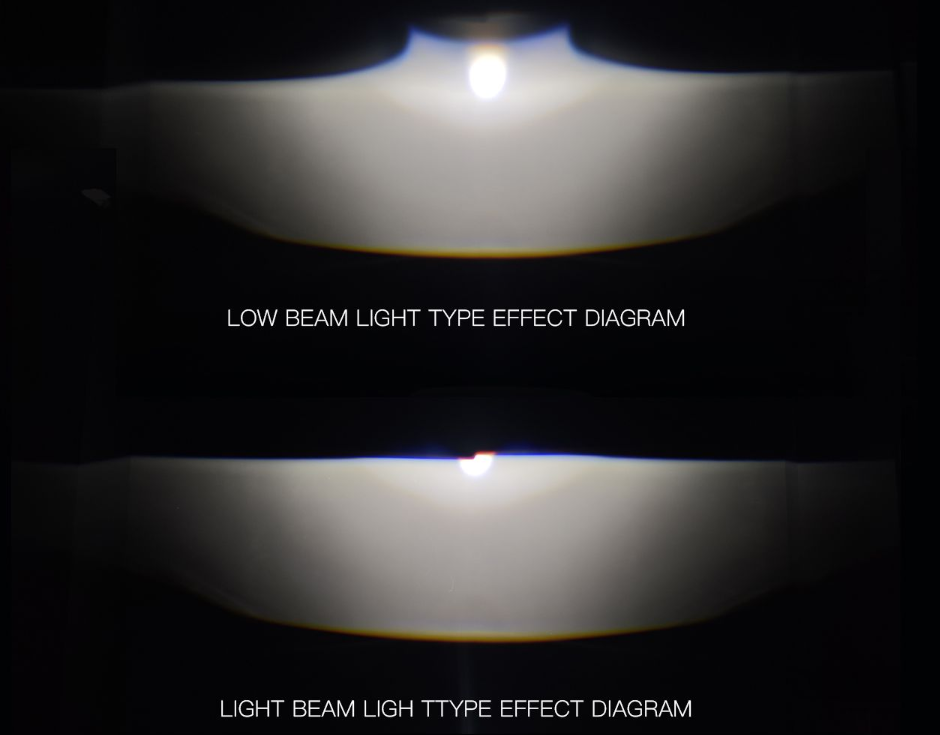
Light scatter above the cutoff line
Bright foreground but weak distance throw
Glare for oncoming drivers
OEM LED systems are engineered differently. The LED chips, reflectors, lenses, and cutoff shields are designed together from the beginning.

Engineers optimize chip size, location, and reflector curvature simultaneously. The entire optical path—from diode to road—is calibrated to the millimeter.
Aftermarket “one-size-fits-all” bulbs simply cannot replicate this level of integration.
Thermal & Electrical Engineering
Performance differences don’t stop at optics. Heat and power management play an equally important role.
OEM LED headlights are integrated into the vehicle’s structure.
They often use large aluminum housings, dedicated heat sinks, and airflow pathways built into the headlight assembly. This provides superior thermal management.
Aftermarket LEDs, by contrast, must fit into a small bulb socket. Manufacturers often cram:
A compact cooling fan
A miniature heat sink
An internal or inline driver
All inside a very confined space.
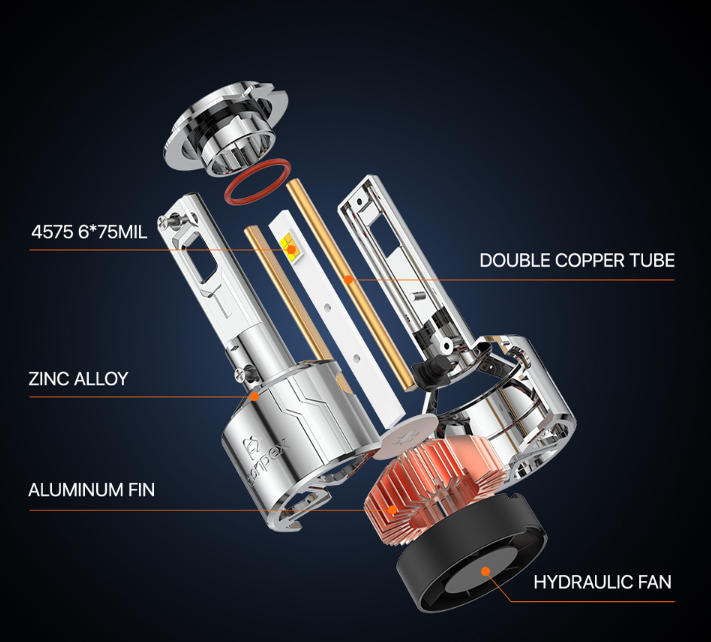
When airflow is restricted, temperatures rise. As heat increases, LED output may throttle down automatically to prevent damage.
Over time, excess heat degrades internal components, shortening lifespan.
Electrical integration is another major difference. OEM systems communicate directly with the vehicle’s network through CAN bus modules.
Voltage regulation, diagnostics, and fault detection are seamless.
Aftermarket installations often encounter plug-and-play LED issues such as flickering, warning lights, or compatibility problems.
This happens because the vehicle’s electrical system was never designed for that specific bulb.
Compliance and Safety Standards
Factory LED systems undergo extensive testing to meet DOT and SAE standards. Engineers evaluate:
Glare control
Beam cutoff sharpness
Light distribution uniformity
Long-distance lux vs. lumens performance
This is important: raw lumens measure total light output. Lux measures how much light actually reaches a specific point on the road.
OEM systems prioritize controlled, usable lux at critical distances—often 50–100 meters ahead—rather than simply maximizing brightness.
Many aftermarket bulbs advertise high lumen numbers but lack precise beam control.
The result is a bright-looking headlight that may not actually improve night visibility.
The Reality of the “Upgrade”
The difference between OEM vs. aftermarket LED headlights comes down to engineering depth.
Aftermarket upgrades are typically designed to be “better than halogen.”
OEM systems are designed for optical perfection within a fully integrated vehicle platform.
If you’re chasing true OEM-level performance, a high-quality projector retrofit—where the entire housing and lens system are replaced—is far more effective than a simple drop-in bulb.
Brightness alone does not equal performance. Precision engineering does.


