How Beam Pattern Design Affects Night Driving Safety
15 April 2026
by Conpex
Reading volume: 1307
Many drivers assume that installing a brighter bulb automatically improves safety. But a bright bulb with a poor pattern is like turning a floodlight into oncoming traffic—impressive, yet dangerous.
What truly determines safe nighttime visibility is the relationship between headlight beam pattern and safety.
A beam pattern is the strategic distribution of light across the road surface. It defines where the light goes, how far it reaches, and how much glare it produces.
In automotive lighting, brightness alone means nothing without optical precision.
The Anatomy of a Safe Beam Pattern
A safe headlight beam pattern isn’t random—it is engineered through precise reflector geometry or projector optics. Two elements are critical: the sharp cut-off line and the headlight hot spot.
The Sharp Cut-off Line
The cut-off line is the horizontal boundary separating the illuminated road from the darkness above. It serves one primary purpose: glare reduction.
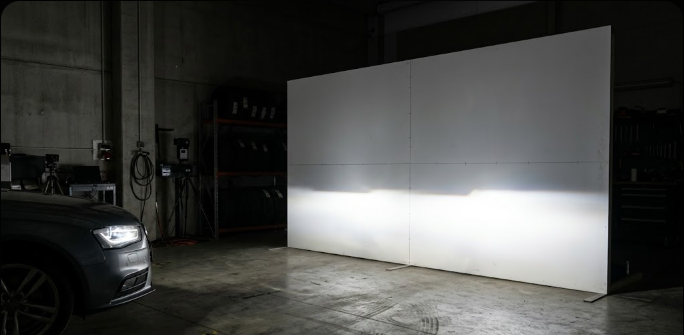
Without a defined cut-off, stray light shines upward into the eyes of oncoming drivers. This causes temporary visual impairment and increases accident risk. A properly engineered cut-off ensures:
Maximum forward road illumination
Minimal upward light leakage
Improved active safety for other road users
Modern projector headlights use a shield to create this crisp boundary. Reflector systems rely on carefully calculated surface angles to achieve similar control.
The Headlight Hot Spot
Within the beam pattern lies the “hot spot”—the region of highest light intensity near the upper center of the beam.
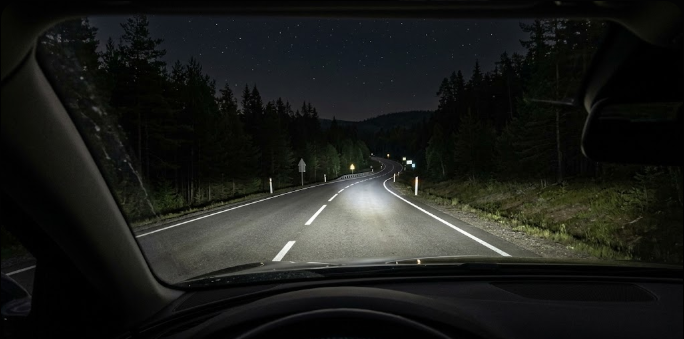
This is not accidental. The hot spot is designed to maximize light throw distance, allowing drivers to see farther down the road without increasing glare. Proper placement of the hot spot ensures:
Long-range visibility
Better recognition of hazards
Efficient use of available luminous flux
Too low, and distance visibility suffers. Too high, and glare increases. The balance is precise and intentional.
Visual Distance and Reaction Time
At highway speeds, lighting performance directly affects reaction time.
At 65 mph (about 95 feet per second), a driver travels the length of a basketball court in roughly one second.
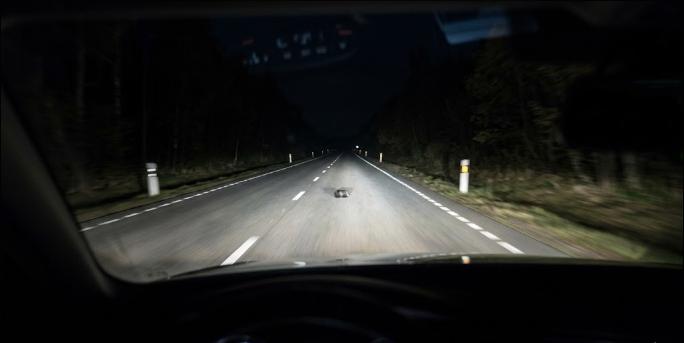
If your headlights illuminate only 150 feet ahead, you have barely over one second to recognize and react to debris, animals, or sudden obstacles.
A well-designed beam pattern increases usable forward illumination without raising glare levels. Instead of flooding the foreground, it projects light farther down the road.
This improves:
Hazard detection distance
Depth perception
Driver confidence at speed
Proper beam geometry distributes intensity gradually—bright in the center for distance, wider at the sides for peripheral awareness.
This balance is critical. Too much foreground brightness forces the eyes to constrict, reducing long-distance visibility. Too little forward throw leaves drivers “outrunning” their headlights.
Good lighting extends reaction time. Poor lighting compresses it.
Reducing Visual Fatigue
Night driving fatigue isn’t just about darkness—it’s about inconsistency.
Poor beam patterns often create:
Dark spots in the lane
Uneven banding across the road
Harsh transitions from bright to dim areas
The human eye constantly adapts to light intensity. When brightness fluctuates abruptly, the pupils must repeatedly adjust. This increases strain and accelerates fatigue.
A smooth beam pattern with gradual light falloff reduces this stress. It provides:
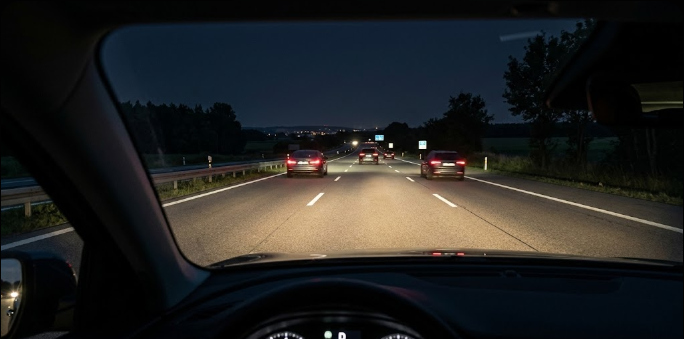
Even road illumination zones
Stable contrast recognition
Reduced eye strain over long distances
Well-controlled light distribution also minimizes reflected glare from road signs, wet pavement, or fog.
Lighting should support the human visual system—not overwhelm it.
Conclusion: Buying Patterns, Not Just Bulbs
In automotive lighting, safety is engineered—not improvised.
The relationship between headlight beam pattern and safety is fundamental. A properly designed beam with a clean cut-off line, well-positioned hot spot, and smooth light distribution saves lives.
When upgrading headlights, prioritize:
Verified photometric testing
Wall-shot beam pattern photos
Controlled glare output
Balanced forward throw
Ignore exaggerated lumen numbers without context.
Precision optics—not raw brightness—are what truly improve night driving safety.


