Are Bi-LED Projectors Worth the Higher Cost?
07 April 2026
by Conpex
Reading volume: 540
Upgrading your headlights can feel overwhelming—especially when comparing a $40 “plug-and-play” LED bulb to a $300+ professional projector retrofit. At first glance, the price gap looks extreme.
That’s where most drivers hesitate.
Is a Bi-LED projector simply a premium aesthetic upgrade? Or is it a meaningful safety investment?
To answer that honestly, we need to evaluate Bi-LED projector cost vs value not just by price—but by engineering, performance, longevity, and long-term return.
The “Hidden” Engineering: Why Bi-LEDs Cost More
A cheap LED bulb is just that—a bulb. It’s designed to fit into a housing originally engineered for halogen. It adapts to an existing system.
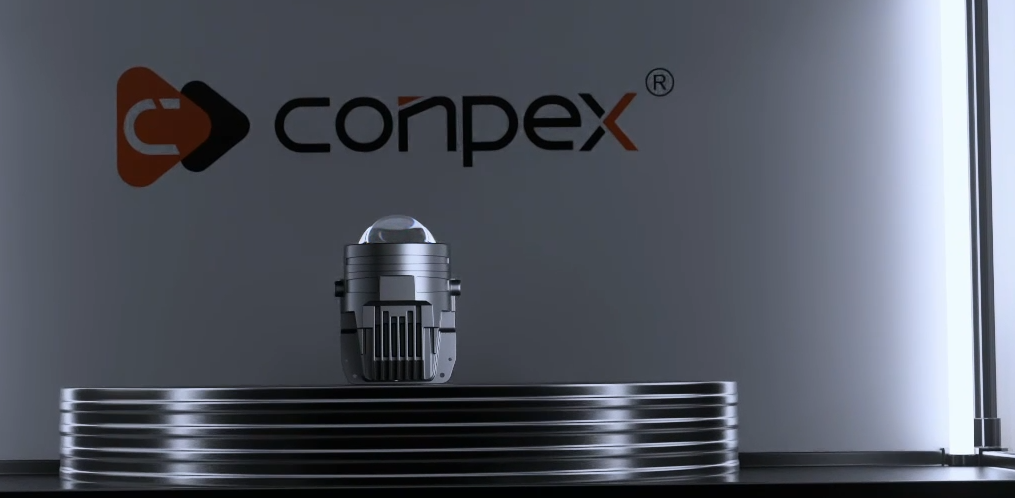
A Bi-LED projector, by contrast, is a complete lighting system.
Integrated Design
A professional headlight retrofit includes:
A dedicated high-output LED chip
A custom-engineered reflector bowl
A precision-shaped glass lens
A mechanical shield mechanism
A heat dissipation system
A regulated driver module
This is integrated LED engineering—not a universal replacement part.
Every component is designed to work together. The lens curvature, reflector geometry, and LED placement are calculated down to fractions of a millimeter.
That level of optical engineering costs money.
The Cut-Off and Solenoid System
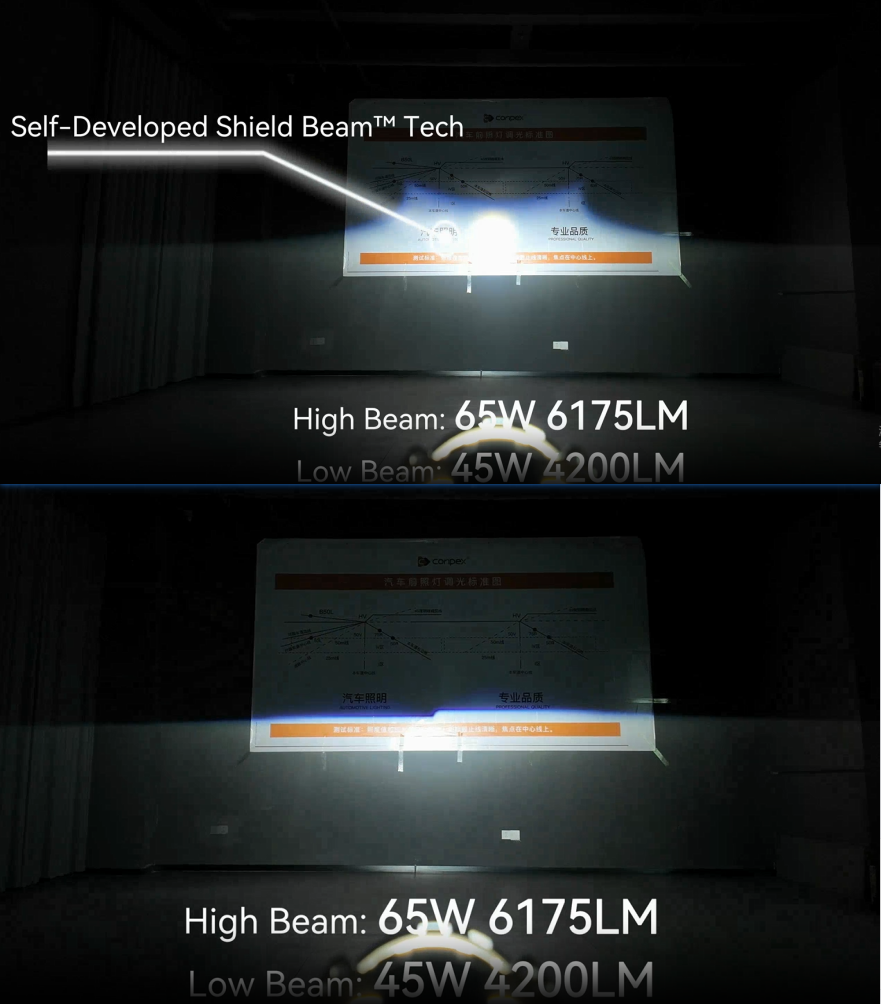
Bi-LED projectors include a solenoid-actuated shield that creates a razor-sharp beam pattern. This mechanism physically blocks upward light to prevent glare, then moves for high beam activation.
Manufacturing this system involves:
Precision metal stamping
Thermal-resistant materials
Calibrated assembly
Optical testing
You are not paying for brightness. You are paying for control.
Performance Comparison: Seeing the Difference
Let’s compare what actually matters on the road.
Cheap Bulb vs. Bi-LED
Cheap LED Bulb:
High lumen claims
Bright foreground
Limited distance throw
Scattered beam pattern
Increased glare risk
Bi-LED Projector:
Controlled beam distribution
Wider, uniform illumination
Long-distance projection
Sharp cut-off line
Reduced glare
Brightness alone does not determine nighttime driving safety.
What matters is usable light.
Bi-LED projectors concentrate light into a defined “hot spot” that extends farther down the road. That increased distance translates directly into more reaction time.
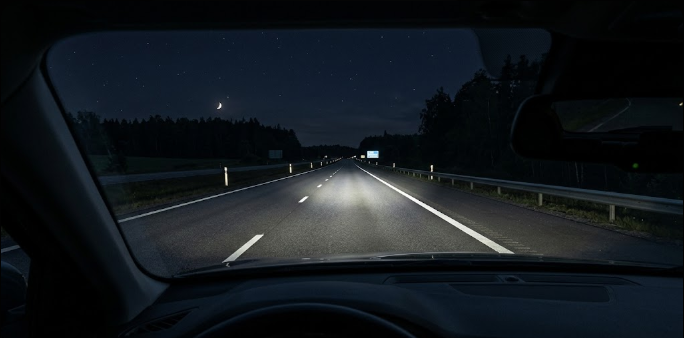
At 65 mph, your vehicle travels nearly 95 feet per second.
If your lighting extends visibility by even 50 extra feet, that can provide over half a second more reaction time—often the difference between stopping safely and colliding with debris or an animal.
Cheap bulbs often look bright close to the bumper, but fail to project light far enough to improve real highway safety.
Bi-LED systems deliver effective illumination—not just cosmetic brightness.
Longevity and ROI: The Financial Reality
Now let’s address the long-term car lighting investment perspective.
Cheap LED bulbs frequently fail within 12–18 months due to:
Poor thermal management
Driver module failure
Cooling fan wear
Voltage instability
Replacing them every year turns a “cheap” upgrade into a recurring expense.
High-quality Bi-LED projectors are built to last 30,000+ hours—often the remaining life of the vehicle.

Let’s break that down into cost per year:
$40 bulb replaced annually for 5 years = $200
$300 projector retrofit lasting 8–10 years = $30–$40 per year
When viewed over time, the cost difference narrows significantly.
Add improved safety, reduced glare complaints, and fewer maintenance cycles—and the return on investment becomes clear.
This is the “buy once, cry once” philosophy in action.
The Final Verdict
Are Bi-LED projector headlights worth the higher cost?
If your goal is a quick cosmetic fix, probably not.
But if you prioritize nighttime driving safety, long-term reliability, and true optical performance, the answer is a resounding yes.
A professional headlight retrofit is not an expense—it’s a one-time safety upgrade.
Viewed through that lens, the value speaks for itself.


