What Are LED Headlights? Benefits for Night Driving Explained
13 May 2026
by Conpex
Reading volume: 1309
LED headlights are automotive lighting systems that use light-emitting diodes instead of traditional halogen filaments.
They are designed to provide clearer, faster, and more efficient light output for night driving.
Compared with many older headlight types, LED headlights can improve road visibility, reduce energy use, and support a more modern lighting upgrade.

For drivers, the main benefit is simple: better visibility at night. For retrofit shops, distributors, and wholesalers,
LED headlights also create a strong product category because they match a common aftermarket demand—brighter and more reliable vehicle lighting.
What Are LED Headlights?
LED stands for light-emitting diode. In automotive lighting, LED chips produce light when electrical current passes through them.
Unlike halogen bulbs, LEDs do not rely on a heated filament. This helps them respond quickly and use energy more efficiently.
There are different types of LED headlight products. Some are LED headlight bulbs, which replace the original halogen bulb.
Others are more complete lighting systems, such as Bi-LED projector lenses, which use LED light sources together with optical reflectors and projector lenses to control the beam pattern.
This difference is important. A bright LED bulb can improve output, but the final road performance also depends on the headlight housing, beam pattern, and cut-off line.
How Do LED Headlights Improve Night Driving?
The first improvement is visibility. A good LED headlight can create a clearer light field in front of the vehicle. Drivers can see road signs, lane markings, obstacles, and curves earlier.
The second improvement is light response. LEDs turn on almost instantly. This is useful when switching between low beam and high beam, or when driving in changing road conditions.
The third improvement is color clarity. Many LED headlights use a clear white color temperature, often around 6000K.
This can make the road look sharper at night. However, white light is not always the best choice for every weather condition.
In fog, rain, or snow, warmer color temperatures may help reduce visual discomfort and reflection.
Brightness: Why Lux Matters More Than Lumen
Many buyers only look at lumen numbers. Lumen measures total light output, but it does not tell you how much useful light reaches the road.
Lux is different. Lux measures light intensity on a specific surface or distance. In automotive lighting, Lux@5m is often used to compare practical beam strength.
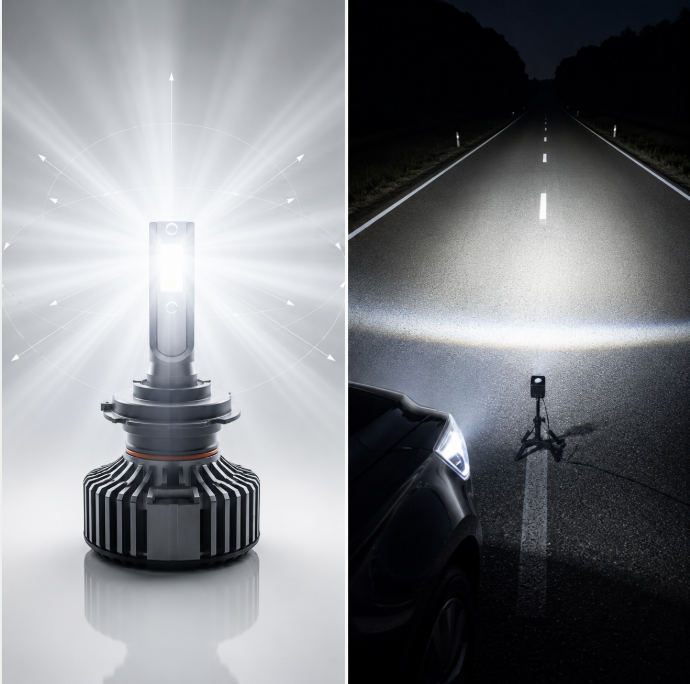
For example, a fog projector with strong low beam LX can improve foreground visibility, while high beam LX helps with longer-distance lighting.
For professional buyers, LX is often more useful than lumen because it connects brightness with real beam performance.
A good LED headlight upgrade is not just about being brighter. The light must be controlled.
The beam pattern decides where the light goes. A poor beam pattern can waste light or create glare.
A clear cut-off line helps keep the low beam focused on the road instead of shining into other drivers’ eyes.
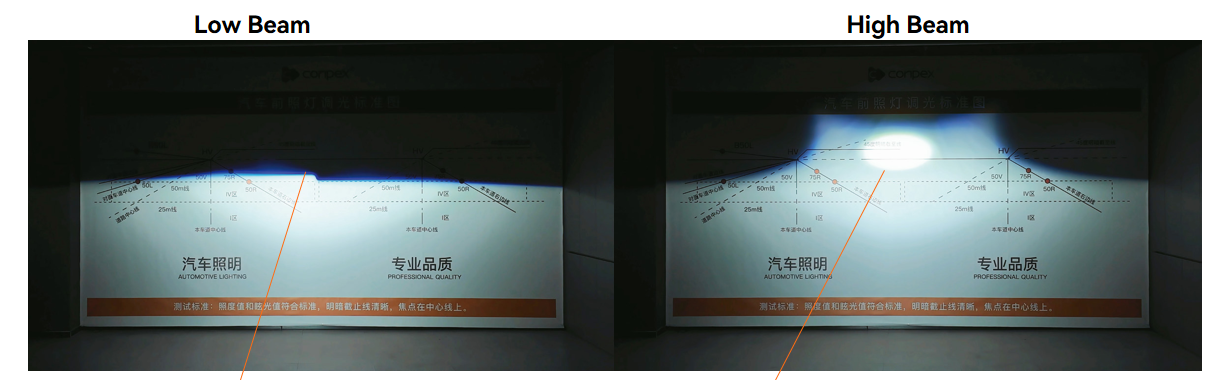
This is why projector-based lighting upgrades are popular in professional retrofit markets.
A projector lens can help control the light more precisely than a simple bulb replacement, depending on the vehicle and installation.
Heat Dissipation and Long-Term Stability
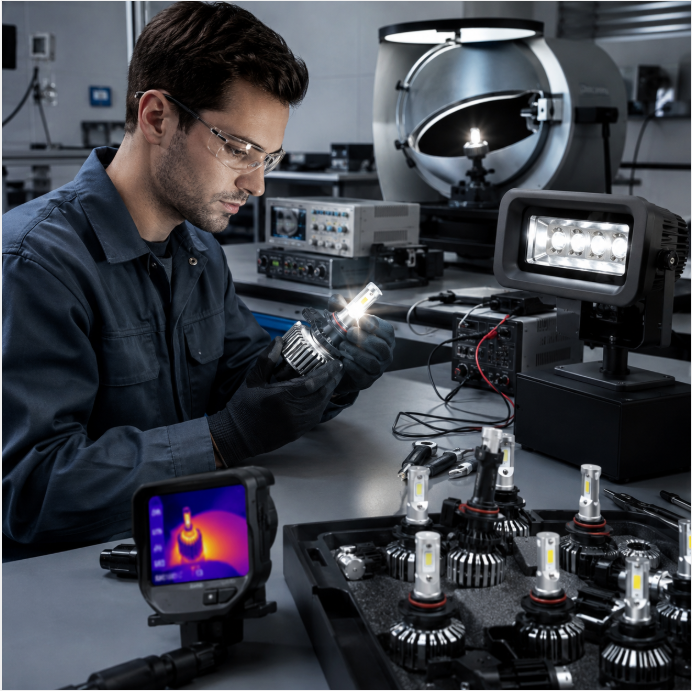
LED headlights still produce heat, especially high-power models. If heat is not managed well, brightness may drop and lifespan may be affected.
Common cooling structures include aluminum housings, fans, copper tubes, fins, and passive cooling designs.
For wholesalers and distributors, stable heat dissipation is important because it affects product reliability, after-sales risk, and long-term customer satisfaction.
Are LED Headlights Suitable for Every Vehicle?
Not every vehicle can use every LED headlight bulb directly. Buyers should check the bulb size, installation space, power compatibility, beam pattern, and local regulations.
Some vehicles may also require decoding or anti-flicker solutions.
For basic upgrades, LED headlight bulbs are often a practical choice. For premium retrofit projects, a Bi-LED projector lens may offer better beam control and a more professional lighting result.
Final Checklist Before Upgrading
Before choosing LED headlights, check these points:
Is the bulb or projector suitable for the vehicle?
Is the beam pattern controlled?
Is there a clear cut-off line?
Are brightness values measured clearly, such as LX?
Is the cooling structure reliable?
Is the supplier able to support stable wholesale supply?
A good LED headlight upgrade should improve visibility, control glare, and stay reliable over time. For business buyers, it should also be easy to explain, easy to sell, and supported by clear specifications.
If you are building an automotive lighting product line, start with the right product type:
LED headlight bulbs for broad replacement demand, projector lenses for premium retrofit, and specialized lighting systems for market differentiation.


